
تعلم اللغة الإنجليزية : الدرس الثامن – المالية الشخصية، المعاملات البنكية وإدارة الأموال
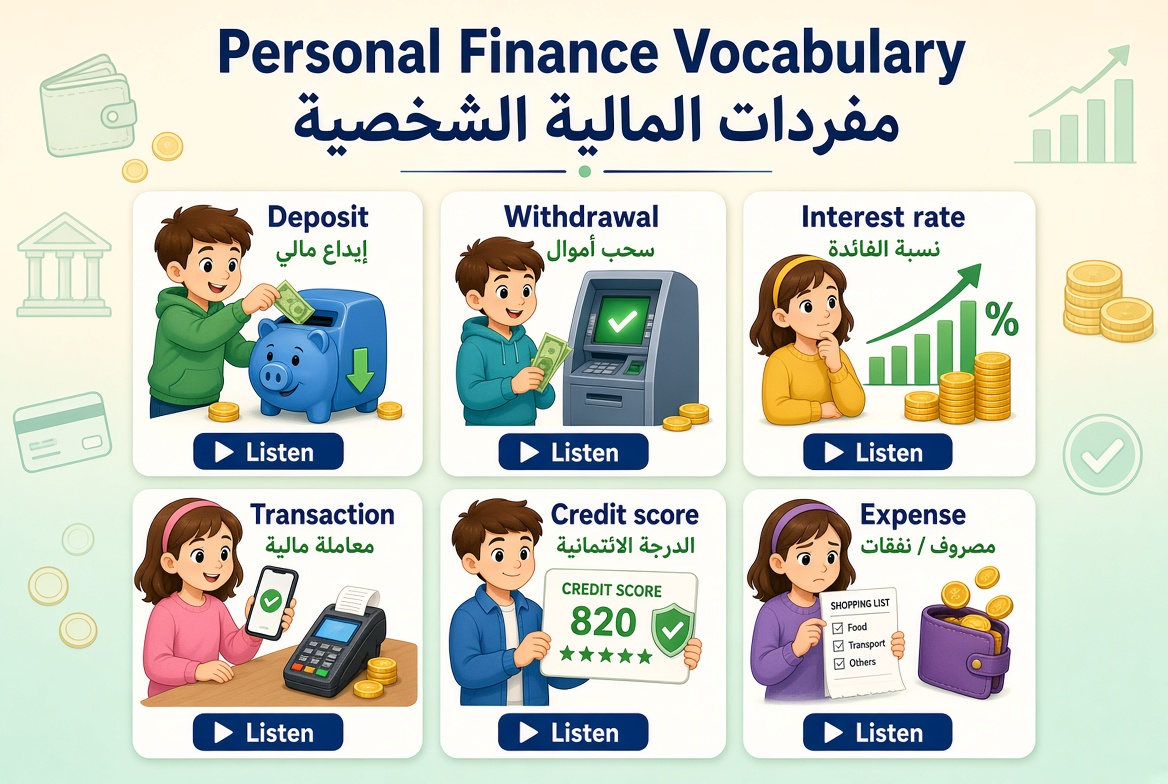
Managing personal finances (إدارة المالية الشخصية), making banking transactions (إجراء المعاملات البنكية), and planning a monthly budget (تخطيط الميزانية الشهرية) are essential intermediate English skills required in both daily life and professional settings. Whether you want to open a bank account (فتح حساب بنكي), discuss interest rates (أسعار الفائدة), or set long-term savings goals (أهداف الادخار طويلة الأجل), mastering financial vocabulary is crucial. In this intermediate lesson, you will explore 15 audio-enabled vocabulary cards, learn how to use First and Second Conditionals for financial planning, read a realistic conversation between a customer and a bank manager, and test your knowledge with 6 interactive exercises.
Grammar Focus: Conditionals (First & Second) in Financial Planning
When discussing finances, budgets, and hypothetical scenario choices, intermediate speakers rely heavily on Conditionals:
- 1. First Conditional (الشرطية الأولى – للنتائج الممكنة والواقعية):
- Structure: If + Present Simple, … Will + Base Verb
- Used to discuss real financial plans and probable future outcomes:
- Example: If I save 20% of my salary, I will buy a vehicle next year. (إذا قمت بادخار 20% من راتبي، سأشتري مركبة العام القادم)
- Example: If interest rates drop, more clients will apply for mortgages. (إذا انخفضت أسعار الفائدة، سيتقدم المزيد من العملاء للحصول على قروض عقارية)
- 2. Second Conditional (الشرطية الثانية – للمواقف الافتراضية أو التخيلية):
- Structure: If + Past Simple, … Would + Base Verb
- Used to discuss hypothetical financial situations or unreal scenarios:
- Example: If I won the lottery, I would invest in real estate. (لو فزت باليانصيب، لاستثمرت في العقارات)
- Example: If he managed his budget better, he would not be in debt. (لو كان يدير ميزانيته بشكل أفضل، لما كان في دَين)
Navigating Financial Systems and Smart Budgeting
Understanding core financial terms enables you to interact confidently with banks and manage your personal wealth effectively:
- Budgeting and Cash Flow (التخطيط المالي وتدفق الأموال): Effective financial management relies on balancing income (money coming in) against expenses (money going out). Establishing a strict budget ensures you avoid unnecessary overdrafts or lingering debt.
- Banking and Credit Tools (الأدوات البنكية والائتمانية): When opening an account, customers choose between current accounts for daily transactions and savings accounts for accumulating interest. Building a healthy credit score is necessary if you intend to apply for a personal loan or a long-term mortgage.
Intermediate English Dialogue Example: Meeting with a Bank Manager
Here is a conversation between a client (Mark) and a bank loan officer (Ms. Davis) discussing loan eligibility:
- Ms. Davis: Good morning, Mr. Mark. How can I assist you with your banking needs today?
- Mark: Good morning. I would like to inquire about applying for a personal loan to expand my shop.
- Ms. Davis: Certainly. First, we need to review your monthly income and recent bank statements.
- Mark: I brought my last six months of statements. My business revenue has been very stable.
- Ms. Davis: Perfect. If your credit score meets our minimum requirements, we will approve the loan within three business days.
- Mark: What is the current fixed interest rate for this type of loan?
- Ms. Davis: The annual interest rate is currently 4.5%, provided you set up an automatic monthly deposit.
- Mark: That sounds reasonable. If I submit the application today, when will the funds be deposited?
- Ms. Davis: Once approved, the funds will be transferred directly to your account by Friday.
Lesson Conclusion
Congratulations! You have successfully completed Level 2 – Lesson 8: Personal Finance, Banking & Money Management.
In this intermediate lesson, you mastered 15 key financial terms including Savings account, Budget, Deposit, Withdrawal, Interest rate, Loan, Mortgage, Transaction, Credit score, Expense, Income, Overdraft, Investment, Statement, and Debt. You also learned how to express financial plans using First and Second Conditional structures.
- Tip of the Day: Use First Conditionals when setting achievable goals (e.g., “If I cut expenses, I will boost my savings”) to naturally practice financial English.
Great job! See you in Lesson 9.