
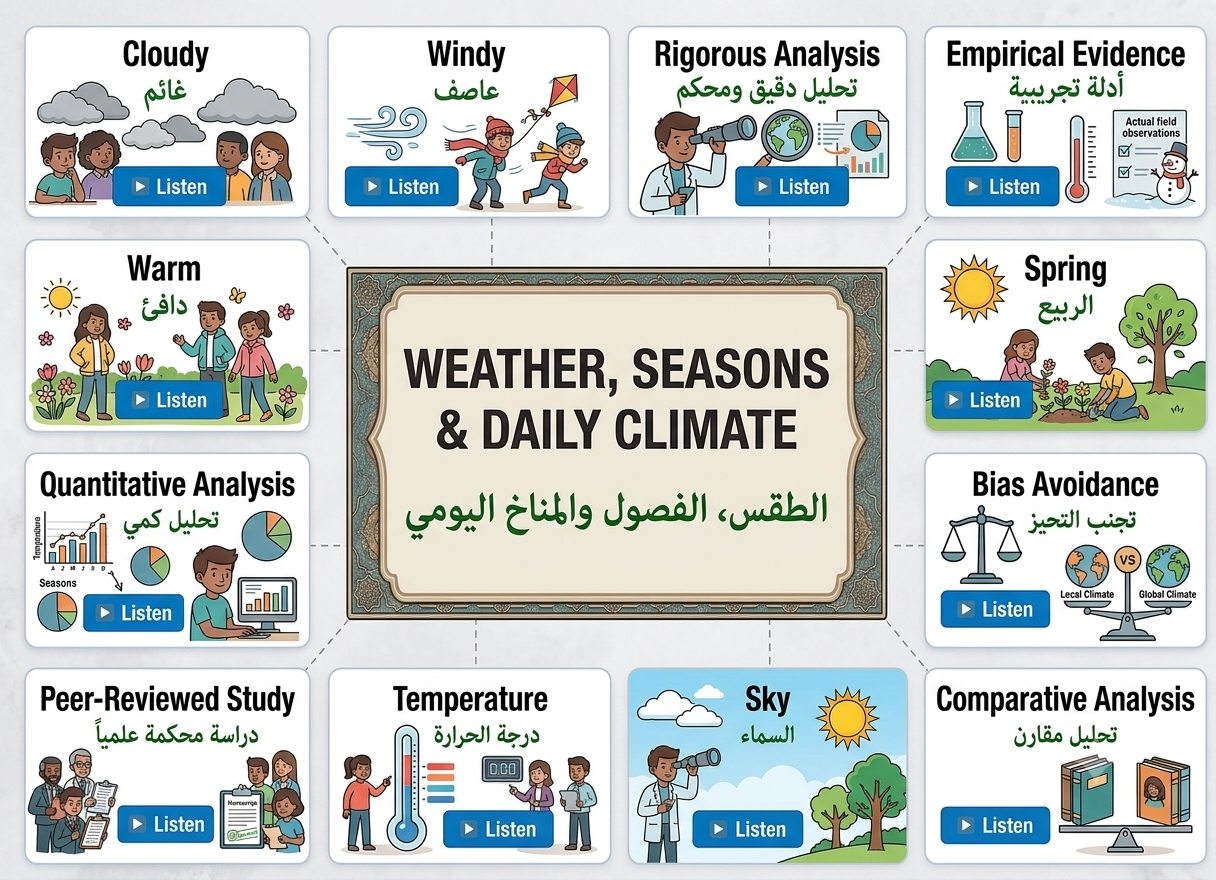
تعلم اللغة الإنجليزية : الدرس الخامس – الطقس، الفصول والمناخ اليومي
Understanding how to talk about the weather (الطقس) and seasons (الفصول) is essential for everyday conversations in English. Whether you are describing a sunny day (يوم مشمس), preparing for cold rain (مطر بارد), or making plans based on seasonal changes (التغيرات الموسمية), using accurate basic vocabulary makes communication clear and natural. In this beginner-level lesson, you will learn essential climate-related words, practice sentence structures with the subject “It”, review simple grammar for talking about current weather conditions, and interact with 15 audio-enabled flashcards to master correct pronunciation.
Grammar Focus: Using “It is” for Weather & Present Continuous for Ongoing Climate Events
In English, we use specific simple structures to describe weather conditions and temperature clearly:
- 1. Using “It is” + Adjective (الوصف باستعمال It is):
- We use It is (or It’s) to state current weather conditions or temperature:
- Example: “It is sunny today.”
- Example: “It is cold in December.”
- 2. Present Continuous for Active Weather (المضارع المستمر للطقس الجاري):
- When describing weather events happening right now, use It is + Verb (-ing):
- Example: “It is raining outside.”
- Example: “It is snowing on the mountains.”
- 3. Asking About the Weather (السؤال عن حالة الطقس):
- Use simple question formulas to ask someone about weather conditions:
- Question: “What is the weather like today?”
- Answer: “It is warm and clear.”
Talking About Weather and Seasons in Daily Life
Describing the climate is one of the most natural ways to start a casual conversation in English:
- Describing Daily Weather (وصف حالة الطقس اليومية): Use basic descriptive adjectives after “It is”. For instance, if the sun is out, you say “It is sunny”, or if there is heavy wind, say “It is windy”. Combining conditions helps build complete thoughts: “It is cold and rainy today.”
- Discussing the Four Seasons (الحديث عن الفصول الأربعة): English uses preposition in when referring to seasons. You can say “I like swimming in summer” or “Trees change color in autumn”.
- Expressing Personal Preferences (التعبير عن التفضيلات المناخية): Combine weather terms with basic verbs like like, love, or prefer: “I prefer warm weather over cold weather.”
Daily Conversation About Today’s Weather
Here is a realistic dialogue between two people discussing daily weather plans:
- Sara: Good morning! What is the weather like outside today?
- Omar: Good morning! It is very cold and cloudy right now.
- Sara: Is it raining? Should I take an umbrella?
- Omar: It is not raining yet, but the weather forecast says it will rain in the afternoon.
- Sara: Thanks for the tip! I will wear a warm coat and take my umbrella.
- Omar: Great idea. Enjoy your day!
📝 تمارين تفاعلية | Practice Exercises – Beginner Level : Lesson 5
Lesson Conclusion
Congratulations! You have successfully completed Beginner Level – Lesson 5.
In this lesson, you gained practical vocabulary and sentence structures for discussing Weather, Seasons & Daily Climate. You added 15 important words to your English practice: Sunny, Rainy, Cloudy, Windy, Snowy, Hot, Cold, Warm, Spring, Summer, Autumn, Winter, Temperature, Sky, and Weather forecast. You also learned how to form descriptions using “It is” and how to ask “What is the weather like today?”.
- Tip of the Day: Practicing daily weather descriptions out loud (e.g., “It is sunny today!”) is an easy way to build habit and fluency in English!
Great job! Ready when you are for the next lesson.