تعلم اللغة الإنجليزية : الدرس الثاني – أفراد العائلة
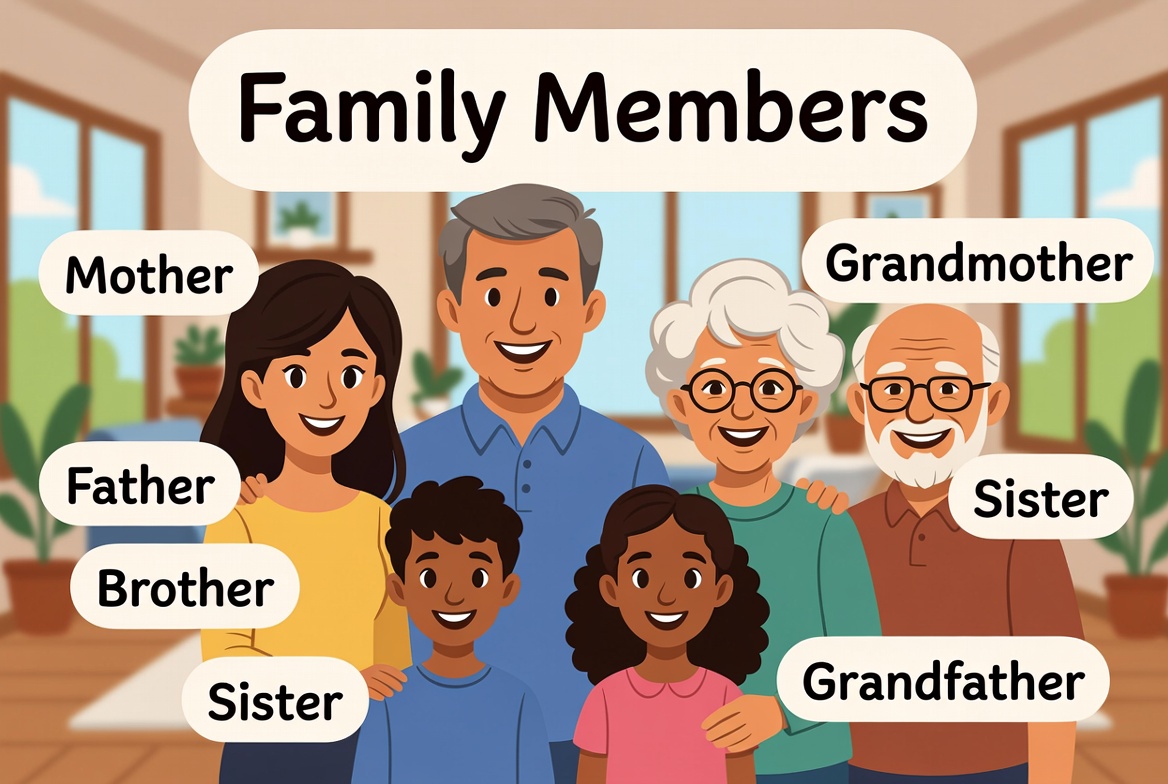
Learning vocabulary related to family members is essential for everyday conversations. Talking about your family, describing relationships, and introducing relatives are common topics when meeting new people or sharing personal stories. In this lesson, you will master the most frequently used English terms for family members along with their Arabic translations and proper pronunciations.
Understanding Family Relationships in English
When speaking about family members in English, a few key distinctions can help you express relationships accurately:
- Immediate Family: Refers to your closest relatives, including your parents (father and mother), siblings (brother and sister), spouse, and children (son and daughter).
- Extended Family: Includes relatives outside the immediate circle, such as your grandparents (grandfather and grandmother), uncles, aunts, and cousins.
- Uncle & Aunt: In English, the word Uncle is used for both your father’s brother (عم) and mother’s brother (خال). Similarly, Aunt represents both (عمة) and (خالة).
Real-Life Conversation Example
Here is a natural conversation about family members between two friends:
- Omar: Do you have a big family, David?
- David: Yes, I do! I live with my parents, one brother, and two sisters.
- Omar: That’s nice! How old is your brother?
- David: My brother is eighteen years old. What about you?
- Omar: I have a small family. It’s just my mother, my father, and me. But my grandfather lives nearby!
- David: Wonderful! Do you visit your grandparents often?
- Omar: Yes, we visit them every weekend with my uncles and cousins.
📝 تمارين تفاعلية | Practice Exercises – Lesson 2
Lesson Conclusion
Congratulations! You have successfully completed Lesson 2.
Today, you expanded your English vocabulary by learning key terms for family members, distinguishing between immediate and extended family, and practicing real-life conversations about family relationships.
- Tip of the Day: Practice describing your own family using full sentences in English—such as “I live with my parents” or “I have two brothers”—to make these words part of your everyday vocabulary.
Thank you for your hard work! Keep up the momentum, and see you in Lesson 3 as we continue building your English language skills!