
تعلم الإنجليزية: الدرس 5 – الصحة، المرض وزيارة الطبيب
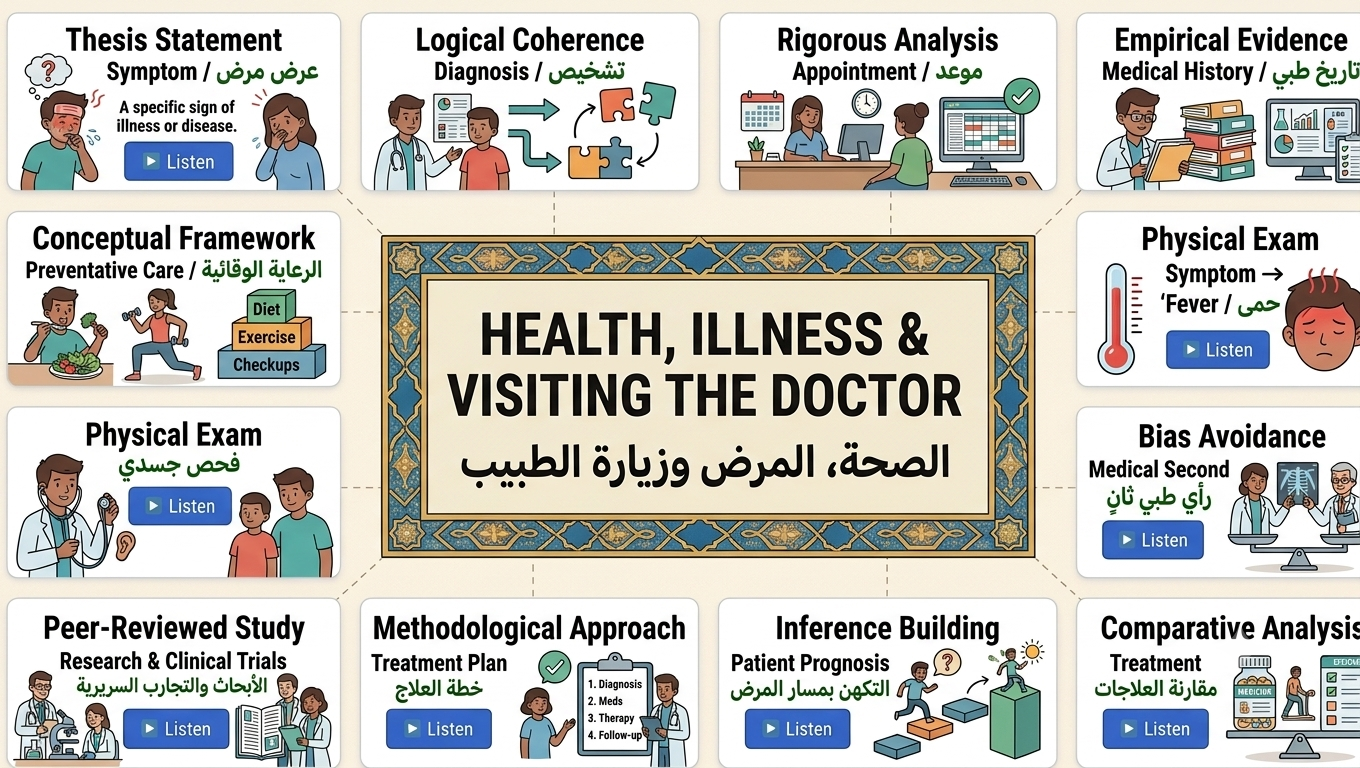
Navigating health matters (التعامل مع الشؤون الصحية) requires clear and precise language, especially when describing physical symptoms (وصف الأعراض الجسدية) or understanding a physician’s instructions (فهم تعليمات الطبيب). Whether you are booking a medical appointment (حجز موعد طبي), explaining how you feel to a nurse (شرح شعورك للممرض), or purchasing prescribed medication at a pharmacy (شراء الدواء الوصفات الطبية من الصيدلية), mastering health-related vocabulary is essential. In this intermediate lesson, you will explore medical terminology, practice using modal verbs for health advice (استخدام الأفعال المساعدة للمصائح الصحية), study natural doctor-patient dialogues, and interact with 15 audio-enabled vocabulary cards.
Grammar Focus: Modal Verbs for Advice and Necessity (Should, Ought to, Must, Need to)
When expressing symptoms or receiving healthcare recommendations, specific modal verbs indicate degrees of advice and obligation:
- 1. Giving Mild or Moderate Advice (Should / Ought to – ينبغي / من الأفضل):
- Used to suggest beneficial actions or treatments without making them strict requirements:
- Standard: “You should drink plenty of fluids and rest.”
- Alternative: “You ought to see a specialist if the pain continues.”
- 2. Expressing Strong Necessity and Medical Orders (Must / Need to – يجب / يتوجب):
- Used when an action is mandatory or critical for health and safety:
- Mandatory: “You must finish the complete course of antibiotics.”
- Requirement: “You need to get a blood test before the appointment.”
- 3. Describing Symptoms with “Have” vs “Feel” (التعبير عن الأعراض):
- Use have + noun for specific conditions (I have a fever, I have a sore throat).
- Use feel + adjective for overall physical states (I feel dizzy, I feel exhausted).
Communicating Effectively in Healthcare Settings
Describing illness accurately helps healthcare professionals offer proper treatment. Here are three key strategies for medical communication:
- Quantifying Pain and Duration (تحديد مدى الألم ومدته): Be specific about when symptoms started and how severe they feel. Phrases like “The pain started three days ago” or “It is a sharp, constant ache” provide useful clarity.
- Discussing Medical History (مناقشة التاريخ الطبي): Mention ongoing conditions or sensitivities using clear structures such as “I am allergic to penicillin” or “I am currently taking medication for blood pressure.”
- Understanding Dosage Instructions (فهم تعليمات الجرعات): Pay close attention to timing phrases like “Take two pills after meals” or “Apply the ointment twice daily before bed.”
Doctor and Patient Consultation Dialogue Example
Here is a practical conversation between a doctor and a patient during a clinic consultation:
- Doctor: Good morning. What seems to be the problem today?
- Patient: Good morning, Doctor. I have had a severe headache and a high fever since yesterday.
- Doctor: I see. Do you also have a cough or a sore throat?
- Patient: Yes, my throat feels sore, and I feel quite dizzy when I stand up.
- Doctor: Let me examine your throat and check your temperature. It looks like a seasonal infection.
- Patient: Is it serious? Do I need any antibiotics?
- Doctor: It is not severe, but you must rest for a few days. I am writing a prescription for painkillers and a syrup for your cough.
- Patient: Thank you, Doctor. How often should I take the medication?
- Doctor: Take one tablet every eight hours after meals. Make sure to drink plenty of water.
Lesson Conclusion
Congratulations! You have successfully completed Level 2 – Lesson 5.
In this lesson, you gained practical fluency in health, medical consultations, and describing physical symptoms accurately. You added 15 key concepts to your active vocabulary: Appointment, Symptom, Prescription, Pharmacy, Headache, Fever, Cough, Painkiller, Examination, Treatment, Dizzy, Allergy, Infection, Recovery, and Emergency. Additionally, you practiced giving advice and expressing obligation using modal verbs (should, ought to, must, and need to).
- Tip of the Day: Remember that when describing illnesses, use have for physical conditions (“I have a fever”) and feel for adjectives (“I feel dizzy”).
Fantastic work! See you in Lesson 6.